Last Updated on September 25, 2026 by Sleepless
Updated September 2026: Scroll to the end for 2026 tickets and timings, how to get there, where to eat and stay, and 5 more heritage monuments to see in Delhi, with their timings.
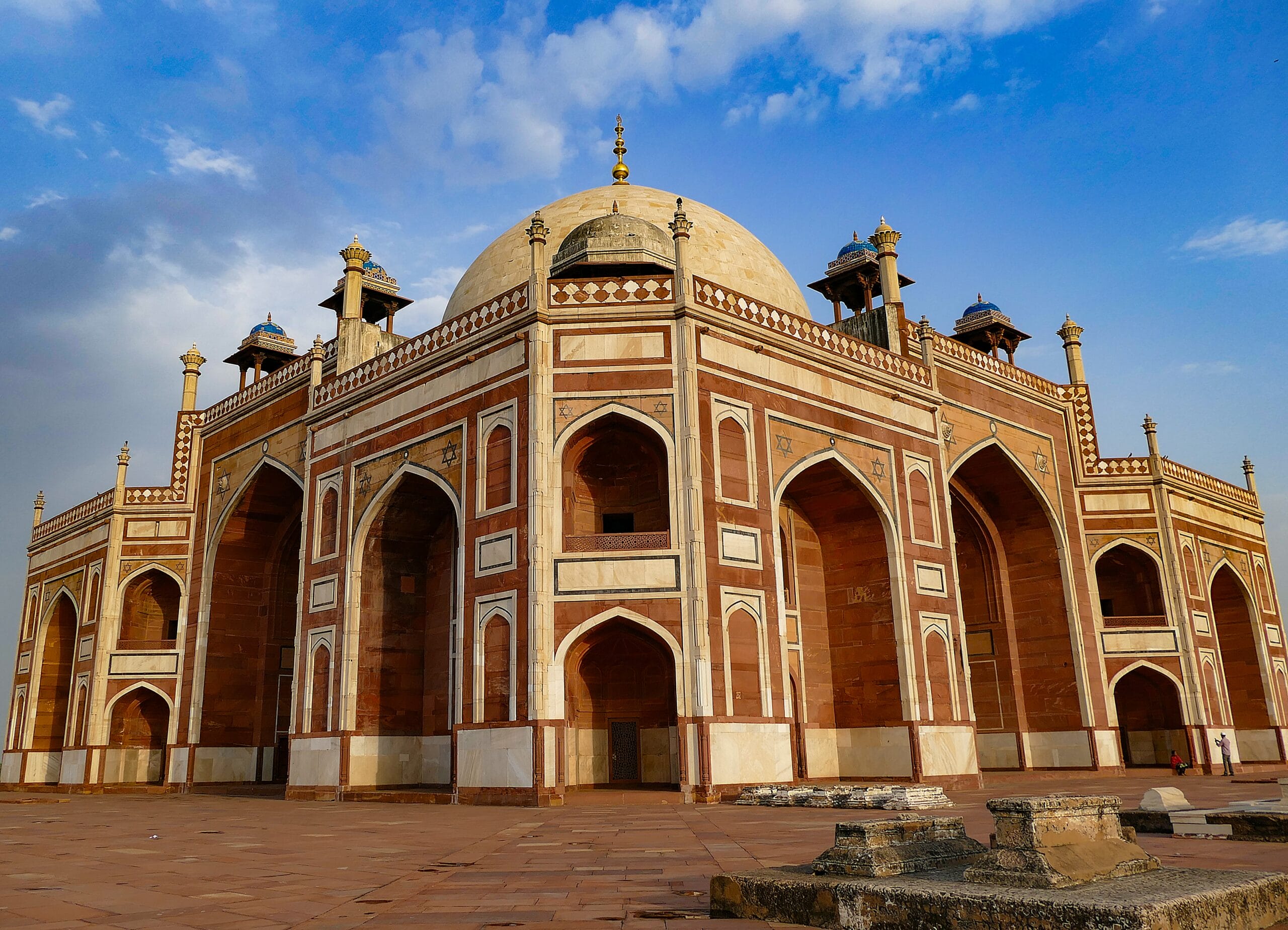
Humayun’s Tomb Delhi is one of the finest examples of Mughal garden-tomb architecture anywhere in India, and the direct inspiration behind the Taj Mahal. You can read about my visit to the Taj Mahal Here.
While I go to New Delhi often, it is very seldom that I get a chance to see the city like a tourist. A few months ago however, I was hosting some friends from outside the country so I visited a few cities in India.
Our first stop was Delhi and I thought we would start with Humayun’s Tomb .
A Quick History of the Mughal Dynasty
Now a quick history break here. Mughal dynasty was a dynasty founded by Babur, the first Mughal king who came to rule India originally from Persia which spanned from Uzbekistan in the east to Greece and Libya in the west. There were around 8 Mughal kings which ruled India for around 330 odd years ( after which the British Colonial powers took over ), the first 5 were notable and great and very importantly Secular rulers, they were in order, Babur, Humayun, Akbar, Jahangir and Shah Jahan and then 3 non notable ones. So if you come across the term “Mughal” anywhere , it simply means relating to these 8 kings ( and in 90% of the cases, to the first 5 ) The last Mughal king, Bahadur Shah Zafar was a great poet but a lousy ruler .
So Humayun, who is buried here, was the 2nd Mughal Emperor. The tomb of Humayun was built by the orders of Humayun’s first wife and chief consort, Empress Bega Begum The construction began in 1565, nine years after his death, and completed in 1572 AD at a cost of 1.5 million rupees at the time. The cost for building the mausoleum was paid entirely by Empress Bega Begum.
The architect of the tomb was the Persian architect, Mirak Mirza Ghiyas who was brought from Herat( northwest Afghanistan). Unfortunately, before the structure’s completion, he died and so his son Sayyed Muhammad ibn Mirak Ghiyathuddin completed his father’s design in 1571.
The structure recently underwent a 6 year restoration and it really looks beautiful now.
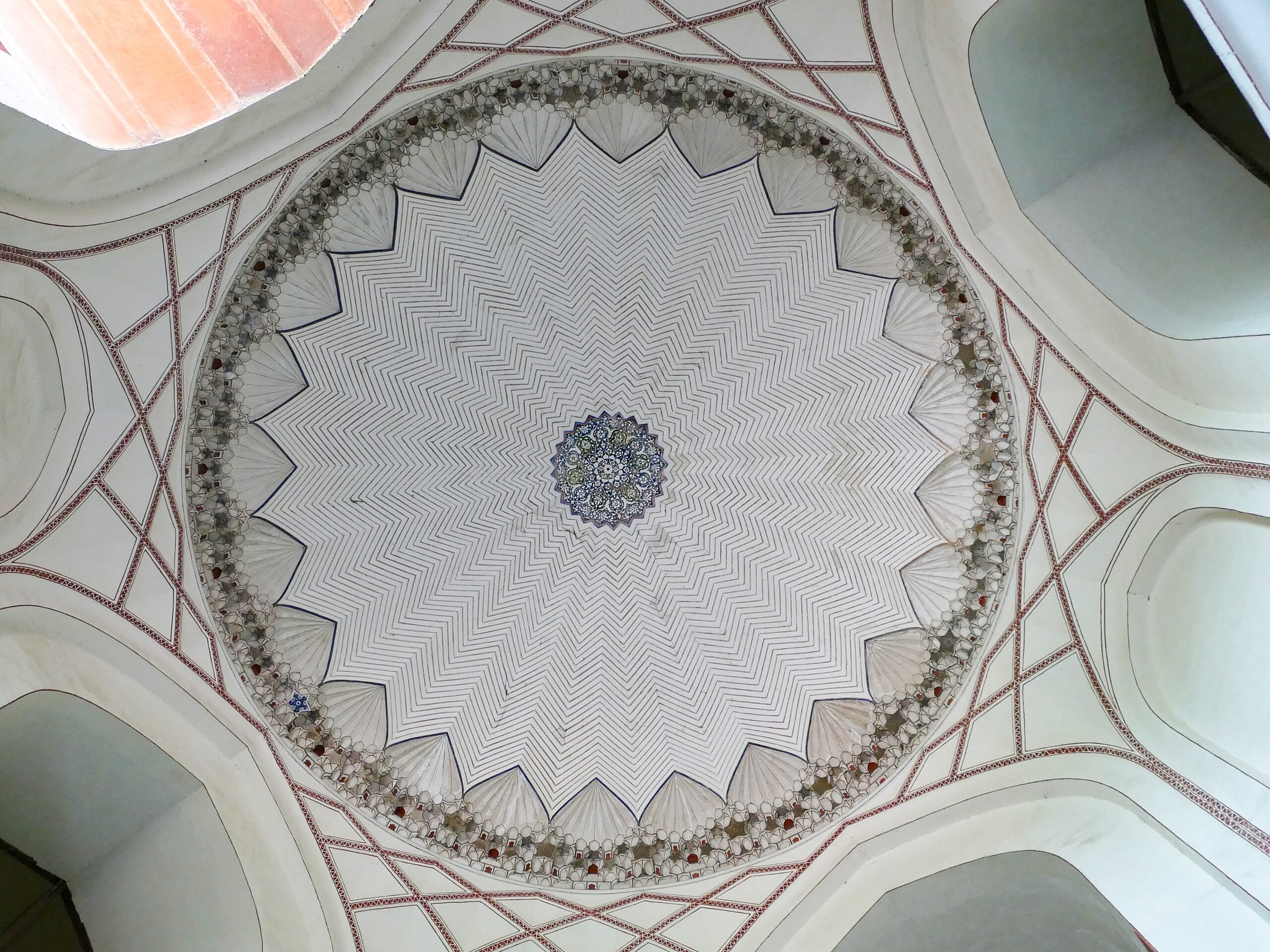
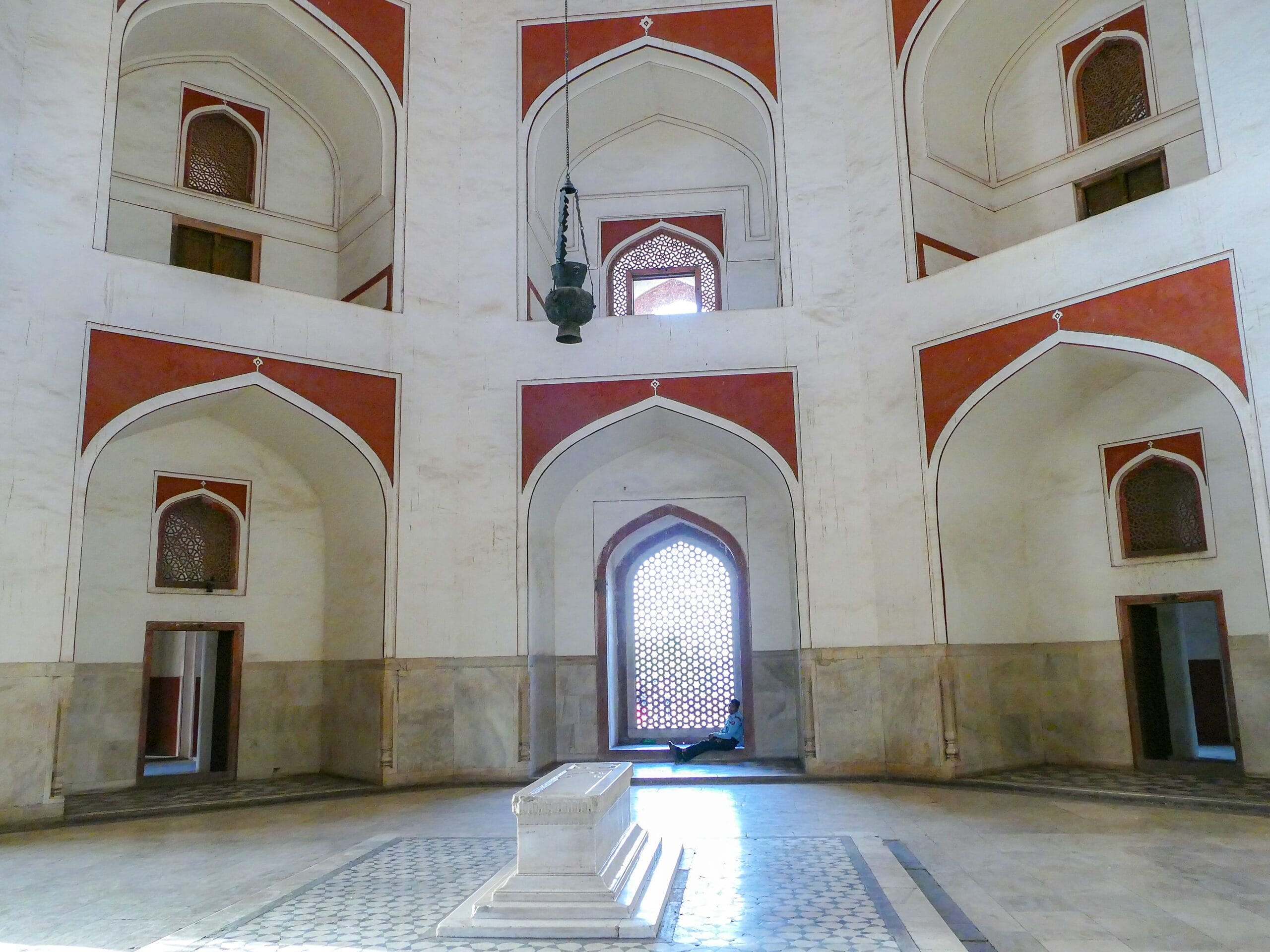
While the main tomb took over eight years to build, it was also placed in centre of a 30-acre Char Bagh (Four Gardens), a Persian-style garden with quadrilateral layout and was the first of its kind in the South Asia region in such a scale. The highly geometrical and enclosed Paradise garden is divided into four squares by paved walkways and two bisecting central water channels, reflecting the four rivers that flow in jannat, the Islamic concept of paradise. The central water channels appear to be disappearing beneath the tomb structure and reappearing on the other side in a straight line, suggesting the Quranic verse, which talks of rivers flowing beneath the ‘Garden of Paradise’.
Tomb and mosque of Isa Khan: Several monuments dot the pathway leading up to the tomb enclosure from the main entrance in the West. Prominent among them is one that pre-dates the main tomb itself, by twenty years. Constructed in 1547 CE, it is the tomb complex of Isa Khan Niyazi, an Afghan noble in Sher Shah Suri’s court of the Suri dynasty, who fought against the Mughals.
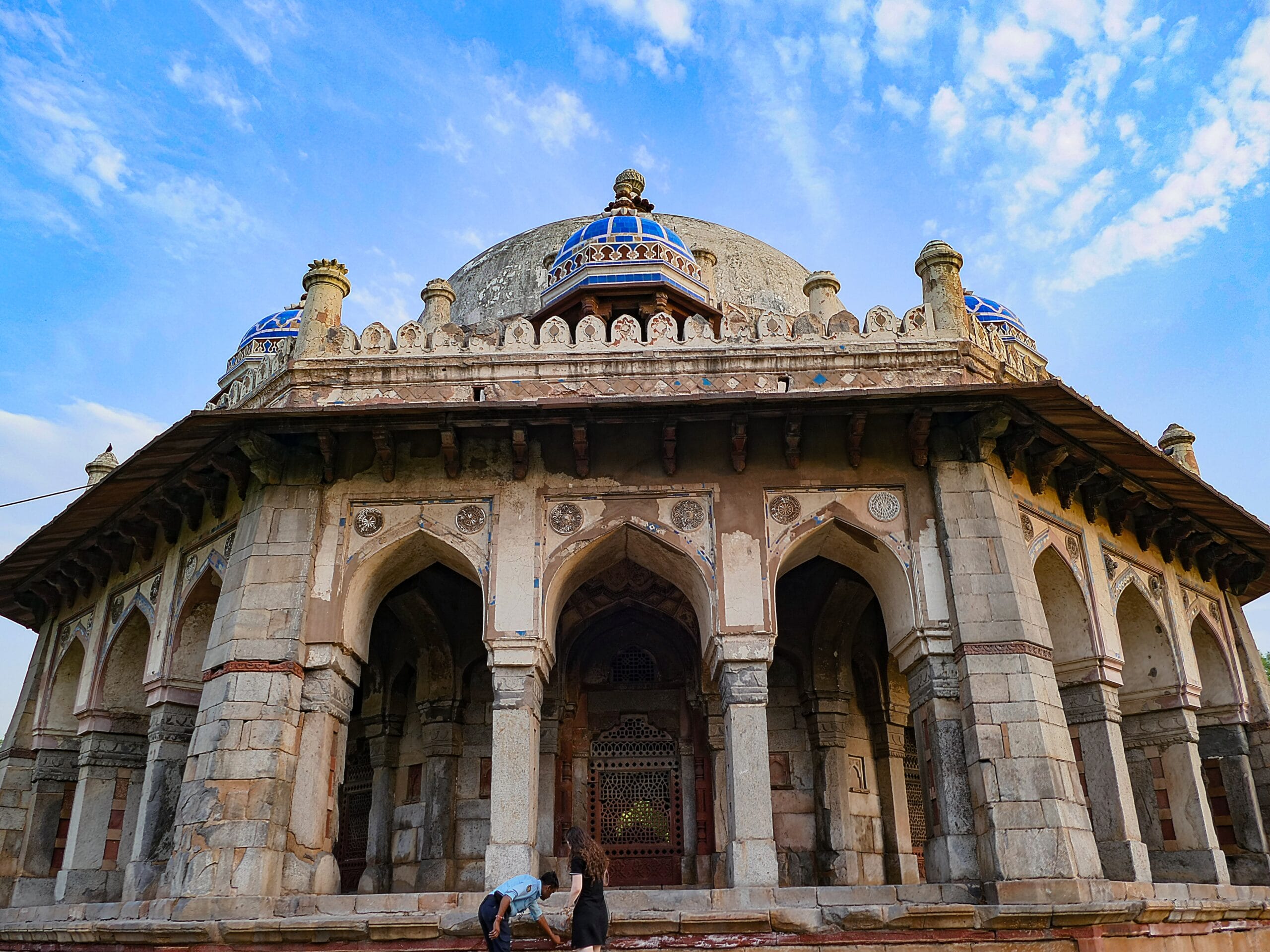
Some pictures of the complex and the Light & sound show at red fort we went to.
Visiting Humayun’s Tomb Delhi: Practical Tips
Humayun’s Tomb Delhi is open to visitors every day except a few national holidays, and the cooler months between October and March are the most comfortable time to explore the gardens without the summer heat. The complex is easy to combine with other Delhi heritage sites in a single day, since it sits close to the Nizamuddin Dargah and is only a short drive from India Gate and the Red Fort. You can find current visiting hours and ticket details on the Archaeological Survey of India website.
UNESCO inscribed Humayun’s Tomb as a World Heritage Site in 1993, recognising it as the first grand example of Mughal dynastic mausoleum architecture, a style that would eventually reach its peak with the Taj Mahal in Agra. If you’re planning a longer Mughal heritage trail, our guide to the Taj Mahal’s hidden symbols is a good next stop.


Humayun’s Tomb Visitor Guide – September 2026
I’ve added this practical guide, updated in September 2026, with current tickets, timings, how to get there, where to eat and stay, and 5 more heritage monuments to see in Delhi. Prices are approximate and change from time to time, so check the ASI e-ticket site (asi.paygov.org.in) before you go.
Quick Facts
| Tickets | Indians (and SAARC/BIMSTEC visitors): ₹35 online / ₹40 at the gate. Foreign nationals: ₹550 online / ₹600 at the gate. Children under 15 go free. Book online at asi.paygov.org.in to skip the ticket queue. |
| Timings | Daily, roughly 6 am to 6 pm (sunrise to sunset). Evening entry till about 9 pm has been introduced for the tomb complex, Sunder Nursery and the Site Museum, but check before you plan around it. |
| Time needed | 1.5–2 hours for the tomb and gardens. Allow 3–4 hours if you add Sunder Nursery and the museum next door. |
| Best time | October to March. Go early morning or late afternoon, when the light on the red sandstone is magical. Avoid midday from April to June, when it’s 40°C+. |
Getting There
- Metro: The nearest stations are JLN Stadium and Jangpura on the Violet Line, about 2 km away. An auto from there costs about ₹50–100.
- Uber / Ola / auto: From Connaught Place, expect roughly ₹200–350 by cab (about 20–30 min).
- By train: Hazrat Nizamuddin railway station is right next door.
Don’t Miss Nearby
- Sunder Nursery: A beautifully restored 16th-century Mughal garden next door, with more tombs, lakes and lawns. It has a small separate entry fee, and a combined ticket is sometimes available.
- Humayun’s Tomb Site Museum: An excellent new museum at the entrance, about the tomb’s history and the Mughal story. Open 10 am to 9 pm.
- Nizamuddin Dargah: The Sufi shrine across the road. Go on a Thursday evening for the qawwali, cover your head and dress modestly.
5 More Heritage Monuments to See in Delhi
Humayun’s Tomb is just the start. Delhi has been the capital of seven cities over 1,000 years, and these five monuments are my picks to go with it. Prices below are per person; ASI sites are usually ₹5 cheaper when booked online.
1. Qutub Minar (Mehrauli)
The 73-metre victory tower begun in 1199 is the tallest brick minaret in the world, surrounded by India’s first mosque and the famous rust-free Iron Pillar. It’s a UNESCO World Heritage Site.
Timings: Daily, 7 am to 5 pm (last entry about 4:30 pm). Tickets: about ₹35–40 Indians, ₹550–600 foreigners. Metro: Qutab Minar (Yellow Line), then a short auto ride.

2. Red Fort (Lal Qila), Old Delhi
Shah Jahan’s red sandstone palace-fortress from 1639, built by the same emperor who built the Taj Mahal. It’s where the Prime Minister raises the flag every Independence Day, and it’s a UNESCO site. The evening light and sound show is worth staying for.
Timings: 9:30 am to 4:30 pm, closed Mondays. Light and sound show at about 7:30 pm (Hindi) and 9 pm (English), Tuesday to Sunday. Tickets: about ₹35–40 Indians, ₹550–600 foreigners. Show about ₹80 Indians, ₹250 foreigners. Metro: Lal Quila (Violet Line) or Chandni Chowk (Yellow Line).

3. Jama Masjid, Old Delhi
One of India’s largest mosques, also built by Shah Jahan (1656). Its courtyard holds 25,000 people. Climb the southern minaret for the best view over Old Delhi, then walk down to Chandni Chowk for street food.
Timings: About 7 am to 12 noon and 1:30 pm to 6:30 pm. It’s closed to tourists during prayers, so avoid Friday midday. Tickets: Entry is free. The camera fee is about ₹300 and the minaret climb about ₹100. Dress modestly (robes are available at the gate) and remove your shoes. Metro: Jama Masjid (Violet Line).

4. Safdarjung’s Tomb (Lodhi Road area)
Built in 1754, this is often called the “last flicker” of Mughal garden-tomb architecture. It’s a quieter, smaller cousin of Humayun’s Tomb, and a lovely spot at sunset. Lodhi Garden (free) is a 10-minute walk away.
Timings: Daily, sunrise to sunset (about 7 am to 6:30 pm). Tickets: about ₹25 Indians, ₹300 foreigners. Metro: Jor Bagh (Yellow Line), about a 5-minute walk.

5. Purana Qila (Old Fort)
A massive 16th-century fort built by Humayun and Sher Shah Suri, on a site believed to be Indraprastha from the Mahabharata. Don’t miss the Qila-i-Kuhna Mosque and Sher Mandal, where Humayun fell to his death, and the boating lake below the walls.
Timings: Daily, 7 am to 5 pm. Tickets: about ₹20–25 Indians, ₹200–300 foreigners. Metro: Supreme Court / Pragati Maidan (Blue Line), next to the Delhi Zoo.

How to combine them: In south Delhi, do Humayun’s Tomb in the early morning, then Purana Qila, then Safdarjung’s Tomb and Lodhi Garden, and finish with Qutub Minar at sunset. In Old Delhi, do the Red Fort, then Jama Masjid, then Chandni Chowk for lunch, and come back for the Red Fort light and sound show. It’s best on any day except Monday.
Where to Eat (Approx. Prices)
- Karim’s, Nizamuddin (5 min walk): The famous Mughlai kitchen, with kebabs, nihari and mutton korma. About ₹900 for two. It doesn’t serve alcohol.
- Khan Market (5–10 min by auto): Cafés and restaurants for every budget. About ₹1,200–2,500 for two. Good for vegetarians too.
- Delhi ‘O’ Delhi, India Habitat Centre: A buffet of Delhi and North Indian classics. About ₹1,500–2,000 per person.
- Indian Accent at The Lodhi: One of India’s most celebrated fine-dining restaurants, serving modern Indian tasting menus. About ₹5,000–8,000+ per person, and you need to book ahead.
- Chandni Chowk (if you’re doing the Old Delhi monuments): Paranthe Wali Gali, chaat and jalebis. About ₹100–300 per person.
Where to Stay Nearby (Approx. Per Night, 2026)
- The Oberoi, New Delhi: Rooms overlook Humayun’s Tomb and the Delhi Golf Club. About ₹20,000 in summer to ₹69,000 at peak (February).
- The Lodhi: A 5-star hotel on Lodhi Road, 2 km away, with private plunge pools and Indian Accent. About ₹20,000–40,000.
- Mid-range (Nizamuddin, Lajpat Nagar, Jangpura): About ₹4,000–9,000.
- Budget guesthouses nearby: From about ₹1,600.